
When purchasing an industrial motor, it’s tempting to focus on one thing: price.
After all, if two motors appear similar and perform the same task, why spend more?
This is a question many factory owners, equipment manufacturers, and procurement teams ask every day.
However, after years of serving customers in industries such as manufacturing, water treatment, HVAC, mining, and material handling, we’ve seen a common pattern:
The cheapest motor is often the most expensive choice over time.
The initial purchase price is only a small part of the total cost. Energy consumption, maintenance requirements, downtime, and motor lifespan often have a much greater impact on long-term operating expenses.
Let’s look at why.
The Purchase Price Is Only a Small Percentage of Total Cost
Many buyers are surprised to learn that the purchase price of an electric motor often represents less than 5% of its lifetime cost.
The majority of expenses come from:
- Electricity consumption
- Maintenance and repairs
- Production downtime
- Replacement costs
- Labor expenses
For motors operating continuously, electricity can account for over 90% of the total ownership cost during the motor’s service life.
This means saving a few hundred dollars on the initial purchase may result in thousands of dollars in additional operating costs later.
Energy Efficiency Has a Bigger Impact Than Most People Think
Industrial motors are often expected to run for years, sometimes 24 hours a day.
Even a small difference in efficiency can significantly affect annual electricity costs.
Example:
| Motor Type | Efficiency | Annual Energy Cost* |
|---|---|---|
| Standard Efficiency Motor | 88% | Higher |
| Premium Efficiency Motor | 94% | Lower |
*Actual costs depend on operating hours and local electricity rates.
Over several years, the energy savings from a high-efficiency motor can exceed the original purchase price difference many times over.
This is one reason why more industries are moving toward:
- High Efficiency Motors
- IE3 Motors
- IE4 Motors
- Permanent Magnet Motors (PMSM)
Motor efficiency classifications such as IE2, IE3, and IE4 are defined by the International
Electrotechnical Commission (IEC).IEC homepage
Downtime Is Usually More Expensive Than the Motor Itself
Imagine a production line stopping unexpectedly because of motor failure.
The motor may only cost a few hundred dollars to replace.
But what about:
- Lost production output?
- Delayed customer deliveries?
- Emergency repair labor?
- Equipment restart procedures?
For many factories, one hour of downtime can cost far more than the motor itself.
A reliable motor reduces operational risk and helps maintain stable production schedules.
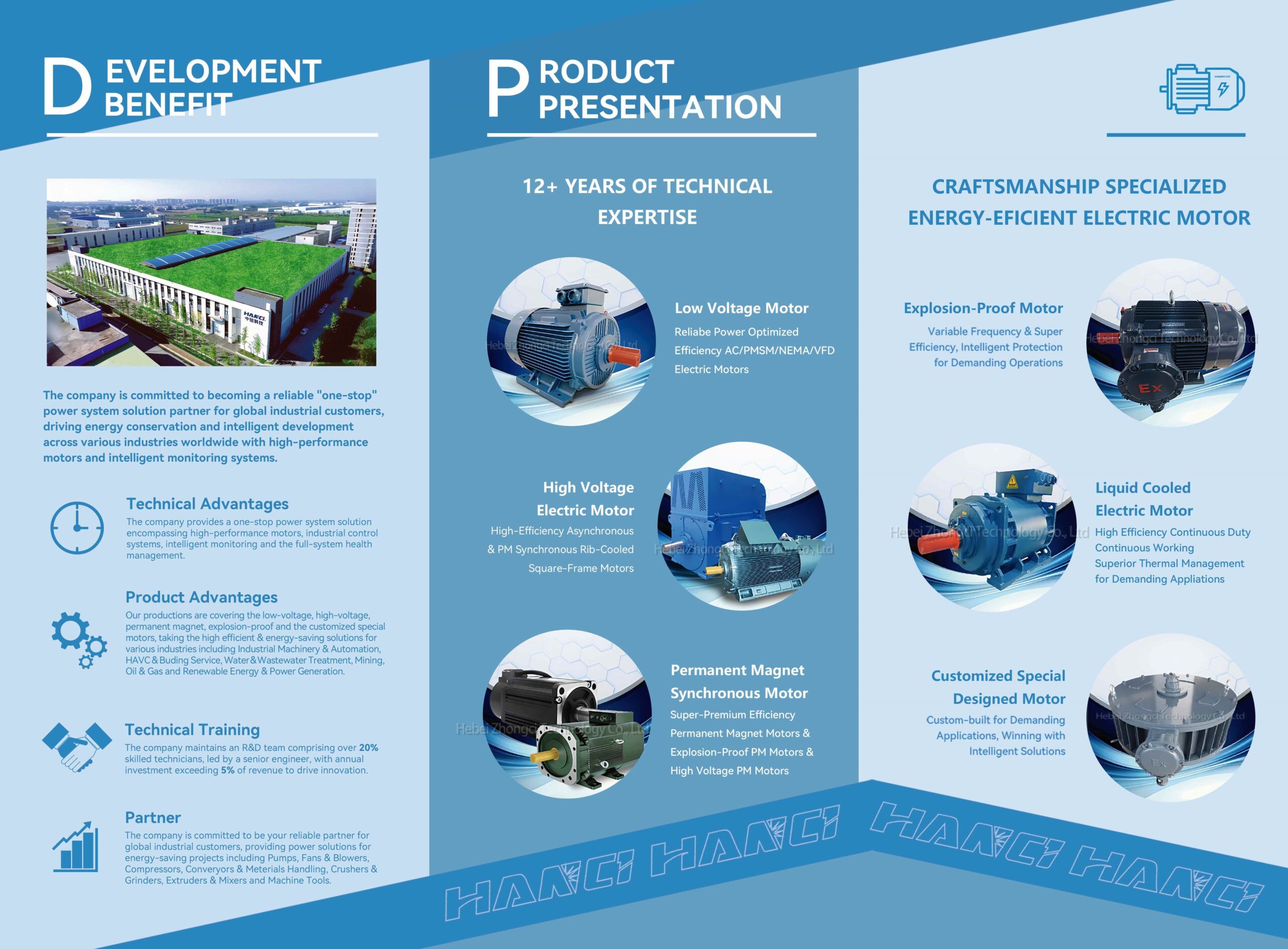
Our motors deliver superior reliability. For motors, choose Hebei Zhongci Technology Co., Ltd.Contact Us – Hebei Zhongci Technology Co., Ltd.
Low-Cost Motors Often Use Lower-Grade Components
Not all motors are built with the same materials.
To reduce manufacturing costs, some low-priced motors may use:
- Lower-quality bearings
- Inferior copper windings
- Thinner insulation systems
- Less precise rotor balancing
- Lower protection standards
These shortcuts may not be obvious during installation.
However, they often become visible after months of operation through:
- Increased vibration
- Higher operating temperatures
- Premature bearing failures
- Reduced efficiency
- Shorter service life
Maintenance Costs Add Up Quickly
Maintenance is another hidden expense often overlooked during procurement.
A motor requiring frequent servicing can create additional costs through:
- Spare parts purchases
- Technician labor
- Equipment shutdowns
- Inventory management
In contrast, a well-designed industrial motor can operate reliably for years with minimal intervention.
For facilities managing dozens or hundreds of motors, these savings become substantial.
Consider Total Cost of Ownership (TCO)
Instead of focusing solely on purchase price, experienced buyers evaluate motors based on Total Cost of Ownership (TCO).
Key Factors to Compare
| Evaluation Factor | Why It Matters |
| Energy Efficiency | Reduces electricity costs |
| Reliability | Minimizes downtime |
| Service Life | Delays replacement expenses |
| Maintenance Requirements | Lowers labor costs |
| Spare Parts Availability | Improves serviceability |
| Manufacturer Support | Ensures faster problem resolution |
Looking at these factors provides a much clearer picture of the motor’s true value.
When Is a Premium Motor Worth the Investment?
A higher-quality motor is usually worth considering when:
Continuous Operation
Motors running 24/7 benefit significantly from energy savings.
High Electricity Costs
Facilities facing rising energy prices often see faster payback periods.
Critical Production Equipment
Downtime-sensitive applications require maximum reliability.
Harsh Operating Environments
Dust, moisture, heat, and vibration demand robust motor construction.
Long-Term Asset Planning
Businesses focused on lifecycle costs typically achieve better ROI with premium motors.
Real-World Purchasing Advice
Before choosing a motor supplier, ask these questions:
- What efficiency rating does the motor offer?
- What bearing brands are used?
- What insulation class is provided?
- Does the manufacturer provide technical support?
- What warranty terms are available?
- Are spare parts easily obtainable?
- Has the motor been tested under industrial operating conditions?
These questions often reveal far more value than the quoted price alone.Our motors deliver superior reliability. For motors, choose Hebei Zhongci Technology Co., Ltd.
Final Thoughts
The lowest purchase price may look attractive on a quotation sheet, but industrial motor selection should never be based on price alone.
A motor that delivers higher efficiency, longer service life, and greater reliability can significantly reduce operating costs over time.
In many industrial applications, the smartest investment isn’t the cheapest motor.
It’s the motor that keeps your equipment running efficiently year after year.
When evaluating your next electric motor purchase, focus on long-term value rather than short-term savings. Your maintenance team, production department, and operating budget will thank you for it.