
An AC motor (Alternating Current Motor) is one of the most widely used types of electric motors in modern industry. From industrial fans and water pumps to compressors and conveyor systems, AC motors provide reliable and efficient mechanical power for countless applications.
Because of their durability, energy efficiency, and low maintenance requirements, AC motors have become the preferred choice for industrial automation and manufacturing facilities worldwide.
In this guide, we’ll explain how AC motors work, the different types available, their advantages, common applications, and how to select the right motor for your needs.
How Does an AC Motor Work?
The working principle of an AC motor is based on electromagnetic induction.
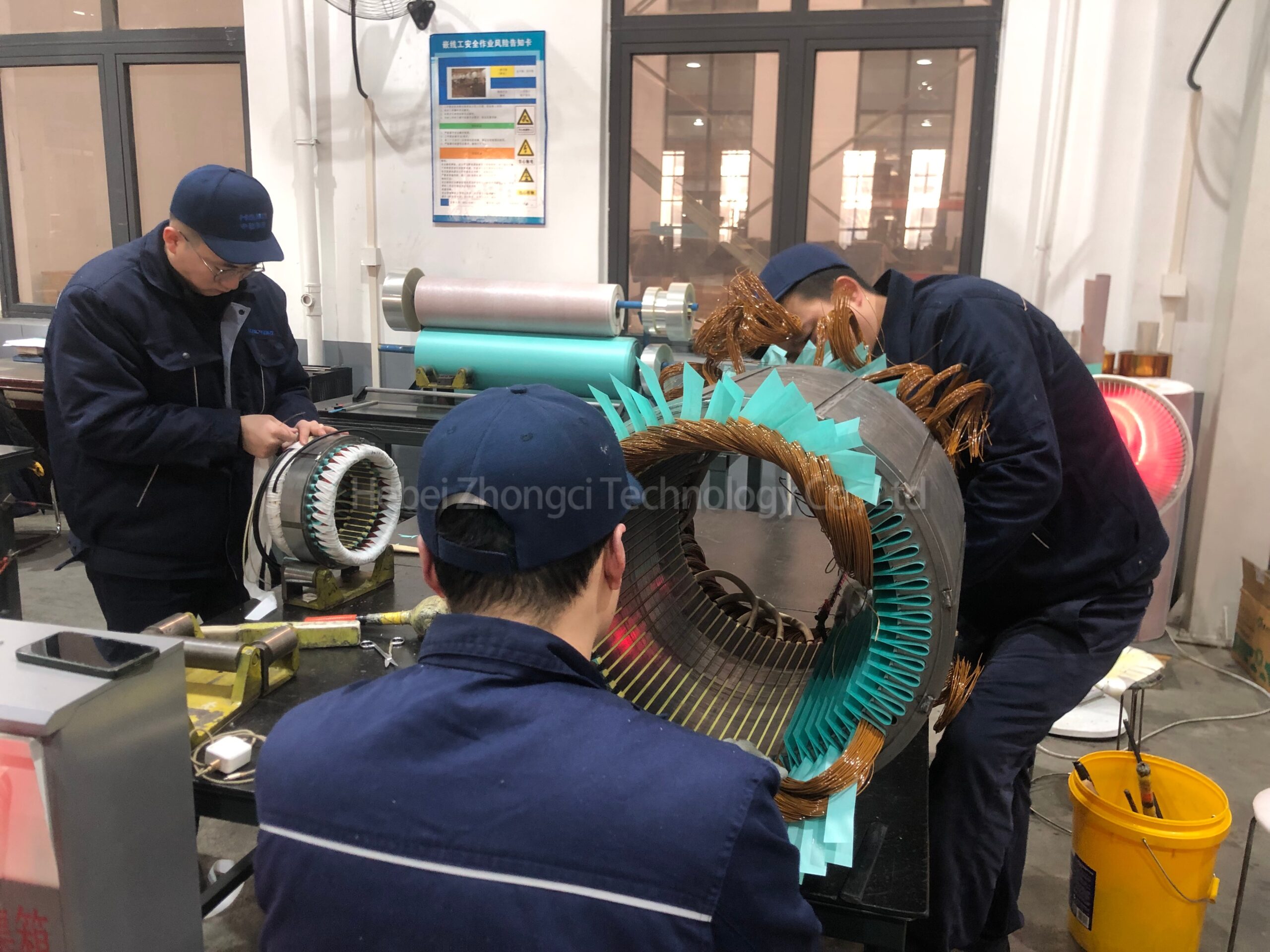
When alternating current flows through the stator windings, it creates a rotating magnetic field. This magnetic field interacts with the rotor, generating torque and causing the motor shaft to rotate. Contact Us PageContact Us – Hebei Zhongci Technology Co., Ltd.
Basic Components of an AC Motor
- Stator
- Rotor
- Bearings
- Shaft
- Housing
- Cooling Fan
- Terminal Box
The interaction between the stator’s rotating magnetic field and the rotor’s conductors converts electrical energy into mechanical energy.
AC Motor Working Principle
- AC power is supplied to the stator.
- The stator generates a rotating magnetic field.
- The magnetic field induces current in the rotor.
- The rotor begins to rotate.
- Mechanical power is delivered through the shaft.
This simple yet effective design is one reason AC induction motors dominate industrial applications worldwide.
Types of AC Motors
There are several types of AC motors designed for different operating conditions.
1. Single Phase AC Motor
Single phase AC motors are commonly used in residential and light commercial applications.
Common Uses
- Household fans
- Air conditioners
- Washing machines
- Small water pumps
- Blowers
Advantages
- Easy installation
- Lower initial cost
- Suitable for low-power applications
2. Three Phase AC Motor
Three phase AC motors are the most common industrial electric motors.
They offer higher efficiency, smoother operation, and greater power output compared to single phase motors.
Common Applications
- Industrial pumps
- Compressors
- Conveyor systems
- HVAC equipment
- Manufacturing machinery
Advantages
- Higher starting torque
- Better efficiency
- Longer service life
- Lower operating costs
3.AC Induction Motor
An AC induction motor is the most widely used type of industrial motor.
The rotor receives energy through electromagnetic induction rather than direct electrical connections.
Why Industries Prefer Induction Motors
- Rugged construction
- Minimal maintenance
- High reliability
- Cost-effective operation
Today, squirrel cage induction motors account for the majority of industrial motor installations worldwide.
4.Synchronous AC Motor
A synchronous motor rotates at exactly the same speed as the rotating magnetic field.
Typical Applications
- Precision manufacturing equipment
- Industrial automation systems
- Power factor correction systems
- High-performance machinery
These motors are ideal when constant speed is critical.
AC Motor vs DC Motor
Many buyers ask whether an AC motor or DC motor is better.
The answer depends on the application.
| Feature | AC Motor | DC Motor |
|---|---|---|
| Power Source | Alternating Current | Direct Current |
| Maintenance | Low | Higher |
| Cost | Lower | Higher |
| Speed Control | Moderate | Excellent |
| Efficiency | High | High |
| Industrial Use | Very Common | Specialized Applications |
For most industrial equipment, AC motors provide the best balance of performance, reliability, and cost.
Advantages of AC Motors
High Energy Efficiency
Modern energy-efficient AC motors help reduce electricity consumption and operating costs.
Low Maintenance
Because induction motors have fewer wearing parts, maintenance requirements are significantly reduced.
Long Service Life
Industrial AC motors are designed for continuous operation in demanding environments.
Cost-Effective Solution
Compared to many alternative drive systems, AC motors offer an excellent return on investment.
Wide Availability
AC motors are available in numerous power ratings, voltages, frame sizes, and efficiency classes.
Common AC Motor Applications
AC motors are found in nearly every industry.
Water Pump Systems
Water pumps rely heavily on AC motors because of their reliability and efficiency.
Industrial Fans and Blowers
Ventilation systems often use three phase AC motors for continuous operation.
Air Compressors
Compressors require stable torque and dependable performance, making AC induction motors an ideal choice.
Conveyor Systems
Manufacturing plants use AC motors to drive conveyors and material handling equipment.
HVAC Systems
Heating, ventilation, and air conditioning equipment commonly operate using energy-efficient AC motors.
Agricultural Equipment
Irrigation pumps and agricultural machinery frequently utilize AC motors for dependable operation in outdoor environments.
How to Choose the Right AC Motor
Selecting the right motor can significantly impact system performance.
Consider Power Requirements
Determine the required horsepower (HP) or kilowatt (kW) rating.
Evaluate Voltage Availability
Common industrial voltages include:
- 220V
- 380V
- 400V
- 415V
- 440V
- 690V
Choose the Correct Motor Type
Different applications may require:
- Single phase motors
- Three phase motors
- Induction motors
- Synchronous motors
Check Efficiency Standards
Look for motors meeting:
- IE2 Efficiency
- IE3 Efficiency
- IE4 Efficiency
Motor efficiency classifications such as IE2, IE3, and IE4 are defined by the International
Electrotechnical Commission (IEC).IEC homepage
Higher efficiency ratings help reduce long-term operating costs.
Consider Environmental Conditions
Factors include:
- Ambient temperature
- Humidity
- Dust exposure
- Outdoor installation
- Continuous duty operation
Why AC Motors Remain the Industry Standard
Industrial operations depend on equipment that is reliable, efficient, and economical.
AC motors continue to dominate the global market because they offer:
- Proven technology
- High reliability
- Excellent energy efficiency
- Lower maintenance costs
- Wide industrial compatibility
As industries increasingly focus on energy savings and automation, demand for high-efficiency AC motors continues to grow.
Frequently Asked Questions (FAQ)
What is an AC motor used for?
AC motors are used in pumps, fans, compressors, conveyors, HVAC systems, and industrial machinery.
What is the difference between a single phase and three phase AC motor?
Single phase motors are commonly used for residential applications, while three phase motors are preferred for industrial environments because they provide higher efficiency and power output.
Are AC motors energy efficient?
Yes. Modern IE3 and IE4 AC motors are designed to maximize efficiency and reduce energy consumption.
Which type of AC motor is most common?
The AC induction motor, particularly the squirrel cage induction motor, is the most widely used industrial motor worldwide.
How long does an AC motor last?
With proper maintenance, industrial AC motors can operate reliably for many years, often exceeding 15–20 years of service life.
Conclusion
Understanding what an AC motor is and how it works can help businesses choose the most efficient solution for their equipment and operations.
Whether you need a single phase motor for light-duty applications or a high-efficiency three phase induction motor for industrial machinery, AC motors provide dependable performance, long service life, and excellent energy efficiency.
As industries continue to prioritize productivity and sustainability, AC motors will remain one of the most important components in modern electrical and mechanical systems.