
The Rising Demand for High Efficiency Electric Motors
In today’s manufacturing environment, energy costs continue to increase while sustainability requirements become stricter.
As a result, more companies are upgrading to high efficiency electric motors to reduce power consumption and improve productivity.
For many factories, the motor itself may represent only a small portion of the equipment investment. However, electricity costs over the motor’s lifetime can account for more than 90% of total ownership costs.
That’s why efficiency matters.
What Is a High Efficiency Electric Motor?
A high efficiency motor is designed to convert more electrical energy into mechanical output while minimizing energy losses.
Compared with standard motors, these motors reduce:
- Heat loss
- Friction loss
- Magnetic loss
- Electrical resistance loss
The result is lower energy consumption and better operating performance.
Why Motor Efficiency Matters
Imagine two motors performing the same task.
One motor operates at 88% efficiency.
The other operates at 95% efficiency.
At first glance, the difference seems small.
However, when a motor runs thousands of hours every year, even a few percentage points can translate into significant energy savings.
Benefits Include
- Reduced electricity bills
- Lower carbon emissions
- Less heat generation
- Longer equipment lifespan
- Improved production efficiency
Industries That Benefit Most from High Efficiency Motors
Water Pump Systems
Pumps often operate continuously, making energy savings highly noticeable.
Industrial Fan Applications
Ventilation systems can consume large amounts of electricity throughout the year.
Air Compressors
Compressors are among the highest energy-consuming machines in many factories.
Material Handling Equipment
Conveyors and automated systems benefit from reduced operating costs and improved reliability.
High Efficiency Motor vs Standard Motor
| Feature | Standard Motor | High Efficiency Motor |
|---|---|---|
| Energy Consumption | Higher | Lower |
| Operating Cost | Higher | Lower |
| Heat Generation | More | Less |
| Service Life | Standard | Longer |
| ROI Potential | Moderate | High |
While high efficiency motors often cost more initially, the long-term savings usually outweigh the purchase price difference.
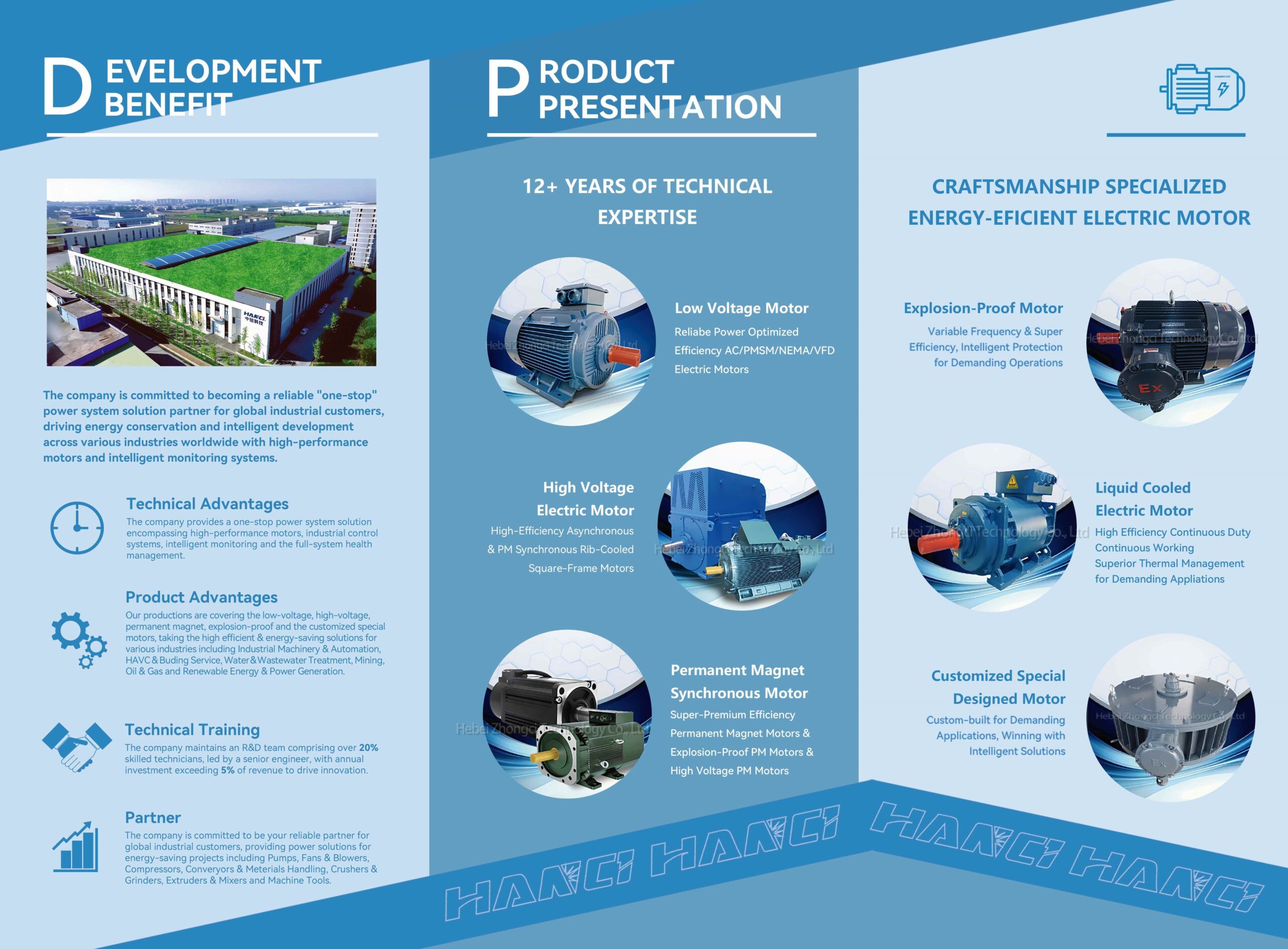
Choose High Efficiency Motors, Choose Hebei Zhongci Technology Co., Ltd. — A Reliable Partner Contact Us – Hebei Zhongci Technology Co., Ltd.
Key Technologies Behind High Efficiency Motors
Modern motor manufacturers use several technologies to improve efficiency.
Premium Copper Windings
Higher-quality copper reduces electrical resistance and energy loss.
Optimized Rotor Design
Advanced rotor structures improve electromagnetic performance.
Precision Bearings
Lower friction contributes to smoother operation and reduced power consumption.
Improved Cooling Systems
Better heat dissipation helps maintain stable operating efficiency.
How to Calculate Motor Energy Savings
When evaluating a motor upgrade, consider:
Motor Power Rating
The larger the motor, the greater the potential energy savings.
Annual Operating Hours
Motors running 24/7 typically achieve faster return on investment.
Local Electricity Cost
Higher electricity prices increase the financial benefits of efficiency improvements.
Load Conditions
Motors operating near their rated load usually perform more efficiently.
Common Mistakes When Choosing an Electric Motor
Many buyers focus only on purchase price.
However, a low-cost motor may become expensive over time due to higher energy consumption and maintenance expenses.
Instead, evaluate:
- Total lifecycle cost
- Efficiency rating
- Reliability
- Manufacturer reputation
- After-sales support
A slightly higher initial investment often delivers substantial savings over several years.
Future Trends in Industrial Motor Technology
The future of industrial motors is moving toward:
- Permanent Magnet Motors
- IE4 and IE5 Efficiency Standards
- Smart Motor Monitoring
- Predictive Maintenance Systems
- Variable Frequency Drive Integration
These technologies help businesses improve efficiency while supporting sustainability goals.
Motor efficiency classifications such as IE2, IE3, and IE4 are defined by the International
Electrotechnical Commission (IEC).IEC homepage
Conclusion
High efficiency electric motors are no longer just an option for energy-conscious businesses—they are becoming the industry standard.
By reducing electricity consumption, minimizing maintenance requirements, and improving operational reliability, high efficiency motors provide measurable value throughout their service life.
For manufacturers seeking long-term cost savings and higher productivity, investing in energy-efficient motor technology is one of the smartest decisions available today.
Our products are designed with energy efficiency and high performance as core advantages.