
When selecting an electric motor for industrial equipment, efficiency is one of the most important factors to consider. A more efficient motor consumes less electricity, generates less heat, and reduces long-term operating costs.
But which motor is actually the most efficient?
The answer depends on the motor type, operating conditions, load requirements, and application.
In this guide, we’ll compare different motor technologies and explain which motor delivers the highest efficiency in real-world applications.
Why Motor Efficiency Matters
Motor systems account for nearly 70% of industrial electricity consumption in many manufacturing facilities.
Choosing a high-efficiency motor can provide:
✅ Lower electricity bills
✅ Reduced carbon emissions
✅ Less heat generation
✅ Longer equipment lifespan
✅ Better operational reliability
Motor Efficiency Formula
Efficiency is calculated as:
Efficiency=Output PowerInput Power×100Efficiency = \frac{Output\ Power}{Input\ Power} \times 100
For example:
| Input Power | Output Power | Efficiency |
|---|---|---|
| 1000W | 900W | 90% |
| 1000W | 950W | 95% |
The higher the percentage, the less energy is wasted.
Types of Motors Compared
Comparison Table
| Motor Type | Typical Efficiency | Maintenance | Speed Control | Initial Cost |
|---|---|---|---|---|
| AC Induction Motor | 85%-96% | Low | Good with VFD | Low |
| Permanent Magnet Motor | 92%-98% | Low | Excellent | High |
| Brushless DC Motor (BLDC) | 85%-97% | Very Low | Excellent | Medium |
| Brushed DC Motor | 70%-85% | High | Excellent | Low |
| Servo Motor | 85%-95% | Low | Outstanding | High |
AC Induction Motors: The Industrial Standard
Advantages
- Reliable design
- Long service life
- Low maintenance
- Cost-effective
- Widely available
Efficiency Range
Modern IE3 and IE4 induction motors typically achieve:
| Efficiency Class | Typical Efficiency |
|---|---|
| IE2 | 88%-92% |
| IE3 | 90%-95% |
| IE4 | 93%-97% |
These motors are commonly used in:
- Pumps
- Fans
- Compressors
- Conveyors
- Industrial machinery
Best For
Applications requiring continuous operation and high reliability.
Permanent Magnet Motors: The Highest Efficiency Option
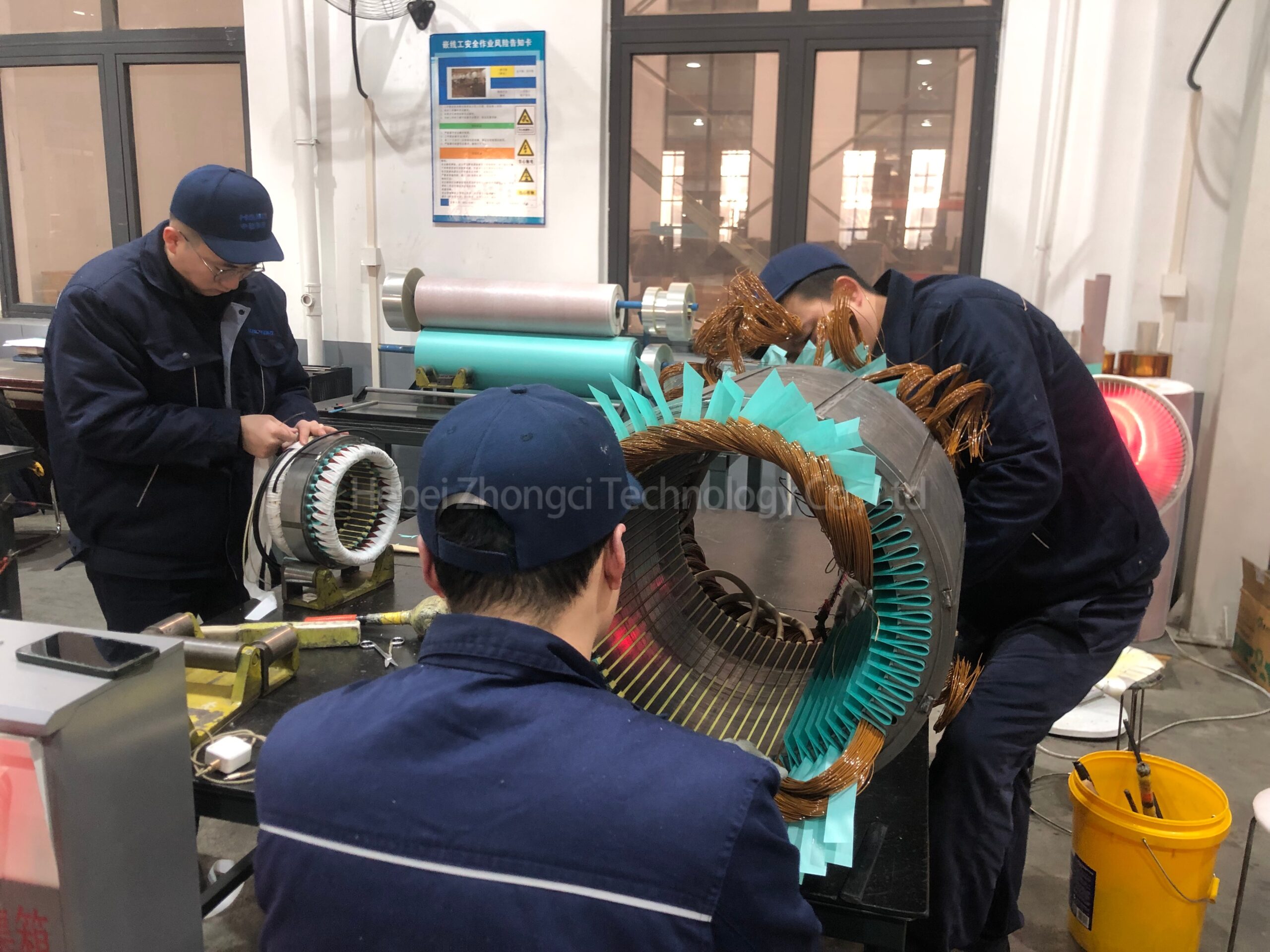
Permanent Magnet Motors (PM Motors) are generally considered the most efficient motor technology available today.
Why Are They More Efficient?
Unlike induction motors, PM motors do not require rotor current to generate magnetic fields.
This eliminates rotor losses and significantly improves energy conversion.
Efficiency Comparison
| Motor Type | Maximum Efficiency |
|---|---|
| Standard Induction Motor | 92%-95% |
| IE4 Induction Motor | 95%-97% |
| Permanent Magnet Motor | 96%-98% |
Advantages
- Highest efficiency
- Lower operating temperature
- Higher power density
- Reduced energy consumption
Best For
- HVAC systems
- Industrial pumps
- Compressors
- Energy-saving projects
BLDC Motors: Efficient and Precise
Brushless DC motors offer outstanding efficiency and precise speed control.
Key Benefits
- No brush wear
- Low maintenance
- High torque
- Excellent speed regulation
Common Applications
| Industry | Application |
|---|---|
| Automotive | Electric vehicles |
| Robotics | Motion control |
| Medical | Precision equipment |
| Electronics | Cooling systems |
Efficiency often reaches 90%-97%.
Brushed DC Motors: Lower Efficiency but Lower Cost
Brushed DC motors are simple and inexpensive but generally less efficient.
Main Drawbacks
- Brush friction losses
- Higher maintenance
- Shorter lifespan
Typical Efficiency
70%-85%
Although still useful in some applications, they are gradually being replaced by BLDC motors.
Energy Cost Comparison
Let’s compare annual electricity consumption.
Assume:
- Power: 15 kW
- Operating Time: 8,000 hours/year
| Motor Efficiency | Annual Energy Consumption |
|---|---|
| 88% | 136,364 kWh |
| 92% | 130,435 kWh |
| 96% | 125,000 kWh |
Even a small efficiency improvement can save thousands of kilowatt-hours annually.
Which Motor Is Best for Different Applications?
| Application | Recommended Motor |
|---|---|
| Water Pumps | IE3/IE4 AC Motor |
| Fans | IE3 AC Motor |
| Compressors | Permanent Magnet Motor |
| Conveyor Systems | AC Induction Motor |
| Electric Vehicles | BLDC Motor |
| Robotics | Servo Motor |
| Precision Machinery | Servo Motor |
How to Choose a High-Efficiency Motor
Before purchasing, consider:
Need Help Choosing the Right Electric Motor?
Selecting the right electric motor can significantly improve equipment performance, reliability, and energy efficiency.
At Hebei Zhongci Technology Co., Ltd.Motor, we specialize in AC motors, 3 phase induction motors, gear motors, and customized motor solutions for industrial applications worldwide.Contact Us – Hebei Zhongci Technology Co., Ltd
Load Requirements
Match motor power to actual load.
Oversized motors waste energy.
Efficiency Rating
Look for:
- IE3 Premium Efficiency
- IE4 Super Premium Efficiency
- IE5 Ultra Premium Efficiency
Operating Hours
The longer the motor runs, the more valuable efficiency improvements become.
Variable Speed Operation
Combine motors with VFDs to maximize energy savings.
Final Verdict: Which Motor Is More Efficient?
If maximum energy efficiency is your primary goal, Permanent Magnet Motors typically offer the highest efficiency levels, often reaching 96%–98%.
However, for most industrial applications, IE3 and IE4 AC induction motors provide the best balance of efficiency, reliability, availability, and cost.
Quick Summary
| Ranking | Motor Type | Efficiency |
|---|---|---|
| 🥇 | Permanent Magnet Motor | 96%-98% |
| 🥈 | IE4 AC Induction Motor | 95%-97% |
| 🥉 | BLDC Motor | 90%-97% |
| 4 | IE3 AC Motor | 90%-95% |
| 5 | Brushed DC Motor | 70%-85% |
For industrial users looking to reduce energy consumption and operating costs, upgrading to a high-efficiency IE3, IE4, or permanent magnet motor is often one of the fastest ways to improve overall system performance.Motor efficiency classifications such as IE2, IE3, and IE4 are defined by the International
Electrotechnical Commission (IEC).IEC homepage