
Introduction
When selecting an electric motor for industrial equipment, one of the most common questions engineers and purchasing managers ask is: AC motor vs DC motor—which is the better choice?
The answer depends on your application, operating environment, speed requirements, and budget. While both motor types convert electrical energy into mechanical motion, their design, control methods, efficiency, and maintenance requirements differ significantly.
In this guide, we’ll compare AC motors and DC motors in detail to help you make the right decision for your next project.
What Is an AC Motor?
An AC motor operates using alternating current (AC) power. It is the most widely used motor type in industrial applications because of its simple design, durability, and low maintenance requirements.
Common AC motor applications include:
- Water pumps
- Compressors
- Industrial fans
- Conveyor systems
- HVAC equipment
- Manufacturing machinery
Advantages of AC Motors
- Lower maintenance requirements
- Longer service life
- Lower initial cost
- High reliability
- Suitable for continuous operation
What Is a DC Motor?
A DC motor operates using direct current (DC) power. Unlike AC motors, DC motors provide precise speed control and excellent starting torque.
Common applications include:
- Robotics
- Electric vehicles
- Battery-powered equipment
- Medical devices
- Automated machinery
Advantages of DC Motors
- Excellent speed control
- High starting torque
- Fast response time
- Suitable for variable-speed applications
AC Motor vs DC Motor: Main Differences
| Feature | AC Motor | DC Motor |
|---|---|---|
| Power Supply | Alternating Current | Direct Current |
| Maintenance | Low | Higher |
| Speed Control | Moderate | Excellent |
| Initial Cost | Lower | Higher |
| Efficiency | High | High |
| Lifespan | Long | Moderate |
| Industrial Use | Very Common | Specialized |
Which Motor Is More Efficient?
Modern AC motors, especially IE3 and IE4 efficiency classes, offer excellent energy performance in continuous-duty applications.
DC motors can also be highly efficient, particularly in applications requiring variable speed operation. However, AC motors generally provide lower operating costs in large-scale industrial environments.
Energy-efficient motors can significantly reduce electricity consumption over the equipment
lifecycle.Motor Systems | Department of Energy
Which Motor Requires Less Maintenance?
AC motors typically require less maintenance because they have fewer wear components.
Many traditional DC motors use brushes and commutators that wear over time and require replacement.
For factories seeking reliable long-term operation, AC motors are often the preferred solution.
Common Industrial Applications
When to Choose an AC Motor
Choose an AC motor if your application involves:
- Pumps
- Fans
- Compressors
- Conveyors
- Production equipment
When to Choose a DC Motor
- Precise speed adjustment
- Battery operation
- Rapid acceleration
- High starting torque
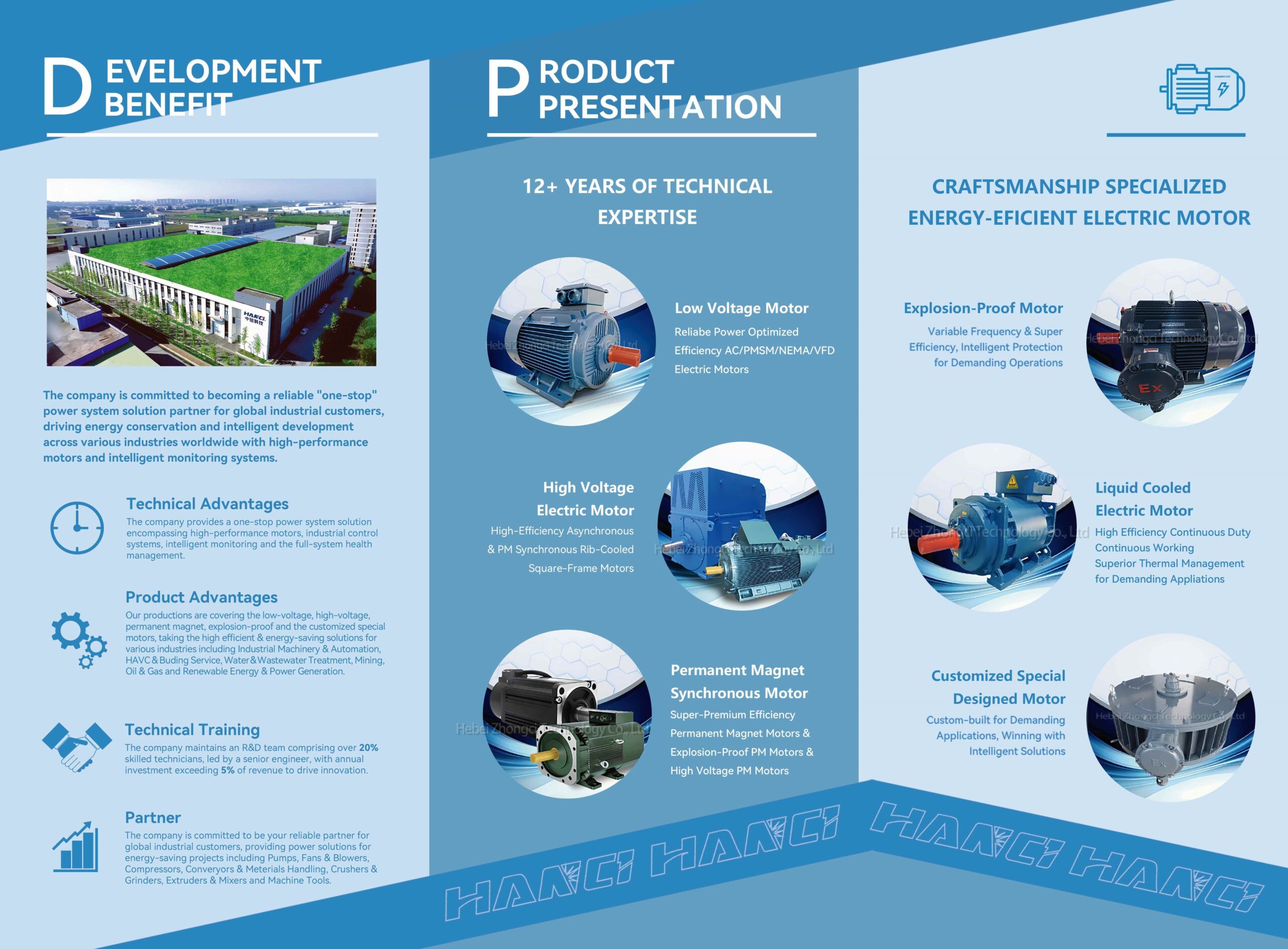
How Hebei Zhongci Technology Co., Ltd.Motor Supports Industrial Buyers
At Hebei Zhongci Technology Co., Ltd. Motor, we supply high-performance AC motors and customized motor solutions for customers in manufacturing, water treatment, agriculture, and industrial automation industries.Contact Us – Hebei Zhongci Technology Co., Ltd.
If you are unsure which motor type best fits your application, our engineering team can help evaluate your operating requirements and recommend the most suitable solution.
Conclusion
The AC motor vs DC motor decision depends largely on your application requirements. For most industrial environments, AC motors offer superior reliability, lower maintenance costs, and better long-term value. DC motors remain an excellent choice when precise speed control and high starting torque are essential.
Need assistance selecting the right motor?
Visit our Product Center or Contact Us page to discuss your application with our technical team.