Low Inertia Servo Motors

Low Inertia Servo Motors

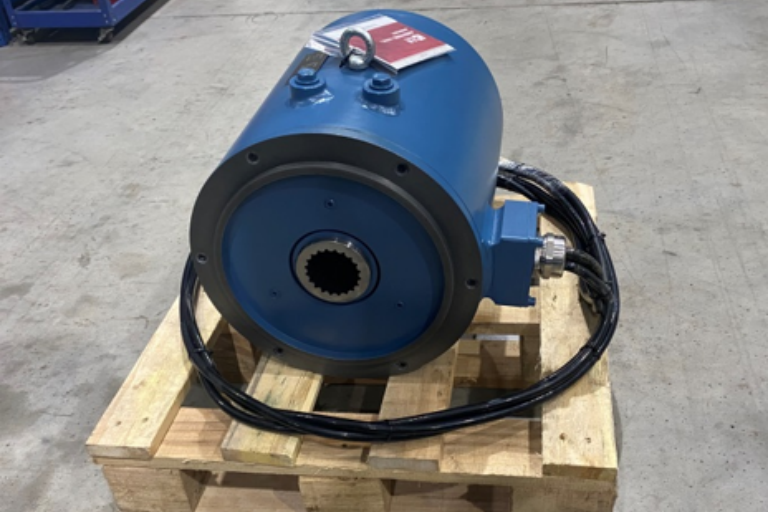
In industrial automation, the speed and precision of motion control directly impact production cycles and product quality. Low inertia servo motors are engineered for this very purpose. Their core advantage lies in an extremely low rotor inertia, enabling acceleration, deceleration, and directional reversal at speeds far exceeding conventional motors. This allows for millisecond-level precision in following motion trajectories. The using of the slim, elongated rotor design combined with the high-density permanent magnets significantly reduces rotational inertia. This allows the motor to reach commanded speeds almost instantaneously, effectively shortening overall machine cycle times. It is particularly suited for applications involving frequent start-stop operations and high-speed, short-distance movements. The low inertia design minimizes energy loss during the acceleration and deceleration, resulting in relatively lower heat generation. Coupled with the optimized cooling structure, the motor maintains stable performance even during prolonged, high-dynamic operation. It also achieves superior compatibility with mainstream servo drives, ensuring smooth and fluid system performance.

This series of low inertia servo motors is engineered for automation equipment demanding rapid response and precise positioning. The lightweight rotor design enables millisecond-level acceleration and deceleration, significantly enhancing the dynamic performance of machinery. Ideal for applications such as industrial robotic arms, CNC machining centers and precision conveying systems, these motors effectively increase production cycles and improve positioning accuracy.

Key Features

Engineered for exceptional instantaneous response, these servo motors feature a lightweight rotor design that enables extremely fast acceleration/deceleration and supports high-frequency start-stop cycles. Their compact construction delivers high torque density within limited spaces. Precision components ensure smooth, low-speed operation without cogging, achieving accurate positioning. An optimized thermal management design maintains stable temperature rise during high-speed continuous duty, extending motor service life.
Increased Machine Cycle Speed
The exceptionally low mechanical inertia allows the motor to reach set speeds and come to a stop almost instantly. This significantly reduces machine idle time, directly boosting production cycle efficiency.
Precise Complex Motion Replication
Superior dynamic responsiveness ensures high-fidelity following of control commands. This minimizes trajectory error, meeting the stringent requirements of high-precision machining, inspection, and assembly applications.
Reduced Total System Energy Consumption
The low rotor inertia minimizes the kinetic energy stored and dissipated during frequent acceleration and deceleration cycles. This reduces drive unit strain and power loss, leading to greater energy efficiency in long-term operation.
Decreased Load on Mechanical Drive Components
The fast yet smooth start-stop characteristics lower the instantaneous shock on gears, timing belts, and other transmission elements. This helps reduce wear and extends the service life of the entire motion system.

Technical Specifications

Power Range:​ Available in a broad spectrum from small 50W models to high-power 15kW units, meeting diverse power requirements ranging from light-duty robotic arms to large machining centers.
Rated Voltage:​ Mainstream models support globally standard three-phase AC voltages of 230V and 400V, ensuring easy integration and strong compatibility with standard servo drives.
Efficiency Class:​ High-grade electrical steel and optimized electromagnetic design deliver exceptionally high operating efficiency, typically far exceeding the IE3 standard. This effectively reduces energy waste and lowers long-term operating costs.
Power Factor:​ Achieves an excellent power factor close to 1 within the high-load and rated speed ranges. This minimizes the reactive power demand on the grid, reduces associated losses, and improves overall power quality.
Protection Class:​ Standard IP65 rating provides reliable protection against dust ingress and water jets from any direction, meeting the environmental requirements of most industrial settings.

Successful Stories

Motor Selection Guide and FAQ

Motor Selection Guide
1. Define Basic Parameters
Power & Speed:​ 
Determine the required rated power based on load characteristics and define the motor pole count and speed range according to your equipment’s operational speed.
Voltage & Frequency:​
Confirm your power supply standard (e.g., 380V/50Hz, 480V/60Hz). Custom designs are available for special voltage requirements.
Mounting Type:​
Specify IEC standard mounting (e.g., B3, B5, B14). Custom the flanges & bases are also supported.
2. Consider Operating Environment
Protection Rating (IP):​
IP55 for standard environments. IP65 is recommended for damp or dusty conditions. Hazardous areas require Ex D/Ex E certifications.
Insulation Class:​
Class F (155°C) for general use. Class H (180°C) insulation is advised for high-temperature environments.
Cooling Method:​
Self-ventilated (IC411) for standard applications. Forced air or water cooling is available for enclosed spaces or high-power-density scenarios.
3. Match Load Characteristics
Starting Torque:​
Consider starting torque for fan/pump loads. Verify locked-rotor torque for conveying equipment.
Duty Cycle:​
Standard motors are suitable for continuous operation (S1). Frequent start-stop cycles (S5) require reinforced bearings and insulation.
Efficiency Requirement:​
Select IE3/IE4/IE5 efficiency classes based on annual operating hours. Ultra-premium efficiency (IE5) motors offer the lowest total cost of ownership for long-running applications.
Get Your Custom Solution & Fast Quote. Our Engineers Are Ready to Help.
Contact Us for the Precise Solution
Provide your equipment parameters, load profile, environmental conditions, and application details.
Receive the complimentary motor selection calculation, the energy efficiency analysis report, and the 3D model.
We support sample testing and operational simulation for validation.


Scroll to Top